

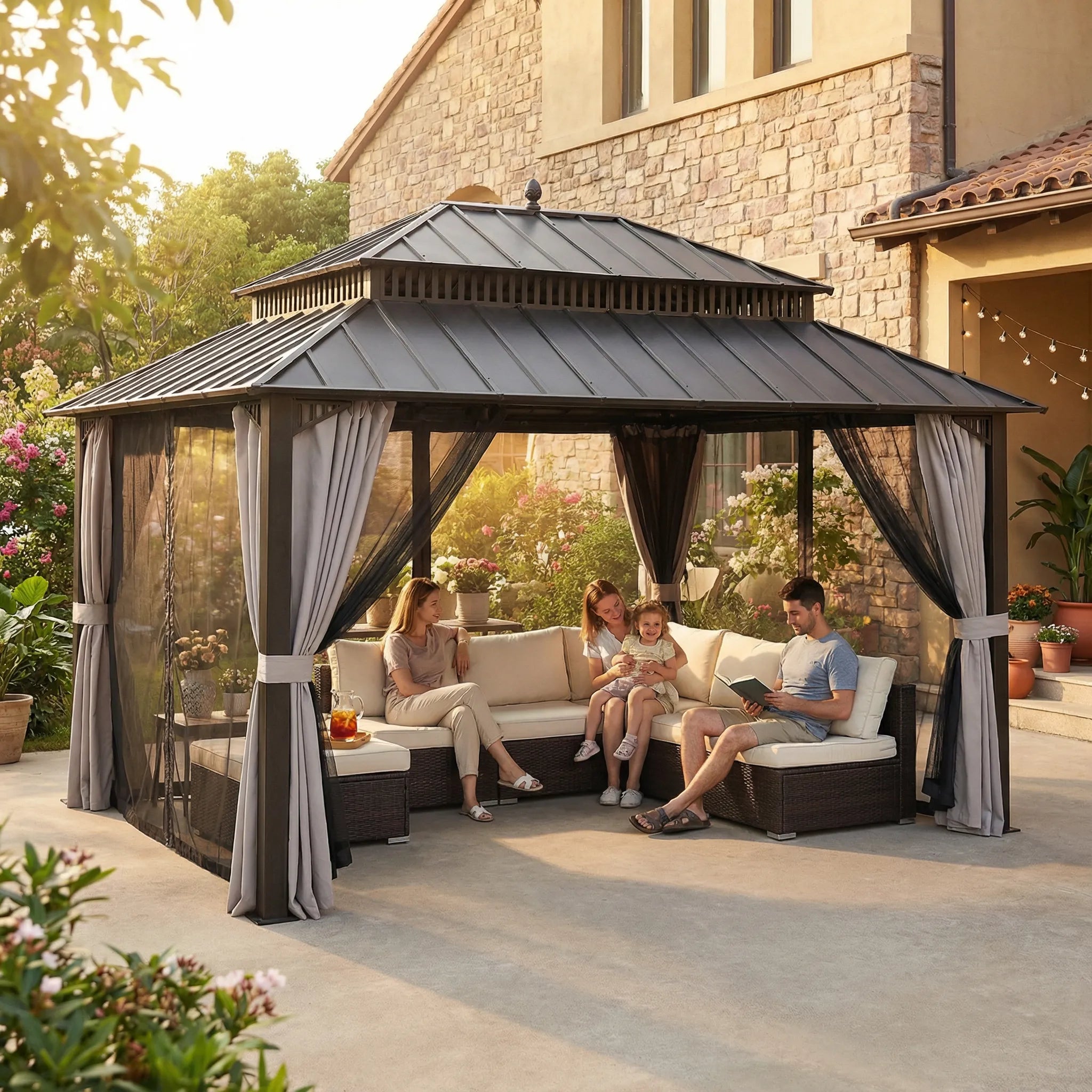



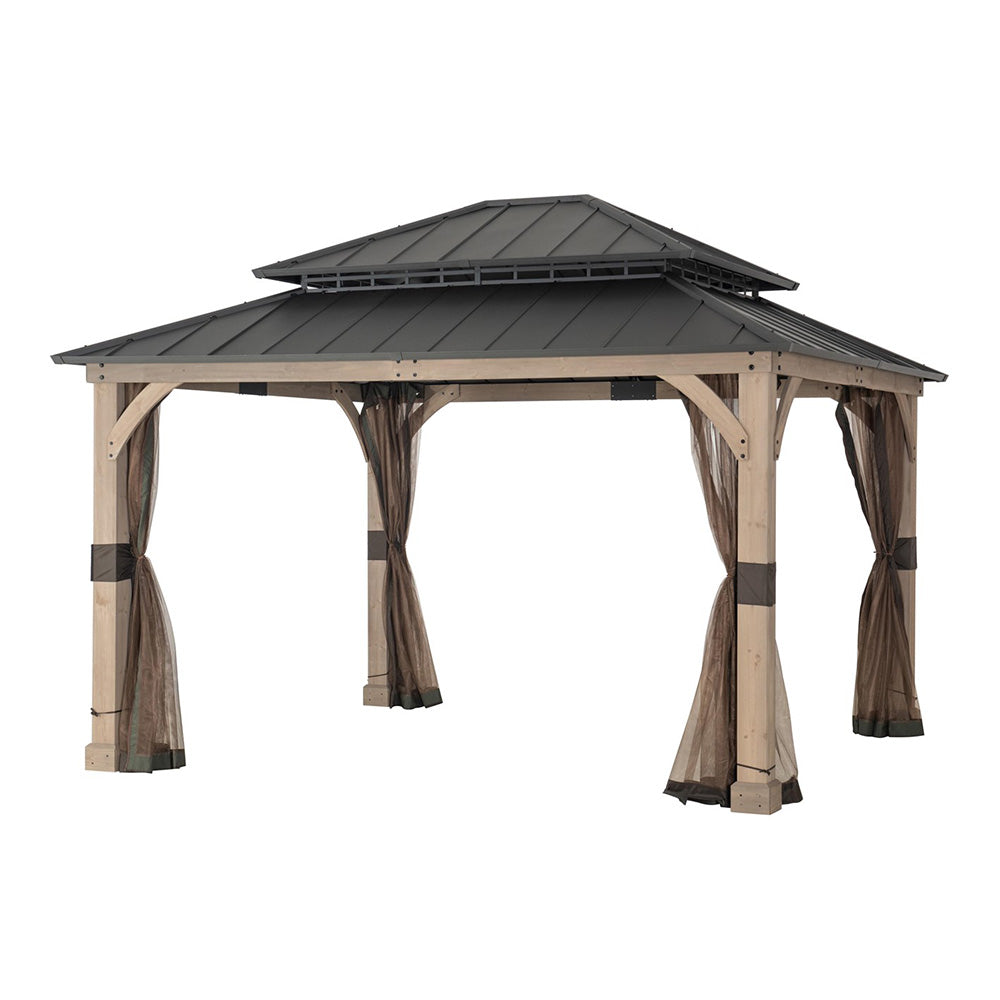
Winter preparation should begin while the carport can still be inspected safely and repaired without weather pressure. Walk around the exact structure and compare its roof, fasteners, anchors, drainage path, and surrounding branches or debris with the current manual. The aim is not to invent a universal snow or wind rating; it is to find loose, damaged, blocked, or out-of-place components before the carport is expected to support the household's winter parking or storage routine. Browse Sunjoy to compare current product details before selecting a model.
For a broader comparison, browse current wood carport options by roof design and care requirements.
How Do You Prepare a Carport for Winter
Begin with a calm, documented inspection on a dry day. Walk around the full structure, look above and below the roofline, and compare what you see with the product manual. The purpose is to identify maintenance needs early, not to certify that any carport will perform the same way in every local weather condition.
- Read the current manual and note the model-specific maintenance, snow-removal, and anchoring directions.
- Inspect posts, braces, connectors, and fasteners for visible looseness, corrosion, cracks, or damage.
- Clear roof, gutters, drainage paths, and the ground around the structure of debris.
- Record anything that needs service and do not rely on a damaged structure until it is addressed.
Should You Inspect Carport Anchors Before Snow
Yes. Anchoring hardware should be inspected before severe weather because it connects the structure to the selected surface. The right hardware, substrate, and method depend on the exact product and site. Do not substitute a generic bolt size, anchor count, or installation method from an online article. Use the model manual and obtain qualified local guidance when the surface or conditions create uncertainty.
Fasteners and Bracing
Check visible fasteners and structural connections only as instructed by the manufacturer. A loose connection may need attention, but overtightening, altering a brace, or replacing hardware with an unapproved part can create a different problem. The inspection should lead back to the manual or service support rather than improvised structural modifications.
How Do You Check Roof Panels and Drainage
Look for accumulated debris, damaged roof sections, blocked gutters, and water paths that end too close to the structure or a walking area. The Sunjoy Newville 10x22 product listing describes an angled roof with integrated drainage, while the Sunjoy Timberland 11x13 wood carport describes a steel gable roof and maintenance that includes regular cleaning and excess-snow removal when needed. These features explain what to inspect, not a promise of identical performance at every property.
|
Inspection area |
What to look for |
Next step |
|
Roof surface |
Debris, visible damage, or material that needs manual-guided care. |
Follow the current manual; avoid standing on or modifying the roof. |
|
Drainage route |
Blocked gutter path, pooling, or discharge near a door or walkway. |
Clear only as directed and correct site drainage issues separately. |
|
Posts and braces |
Visible movement, damage, corrosion, or loose hardware. |
Use manufacturer guidance or qualified service support. |
|
Anchor points |
Hardware condition and compatibility with the installed surface. |
Verify against the product instructions and local conditions. |

How Do Sunjoy Wood Carports Fit This Checklist
The Sunjoy Newville 10x22 listing identifies wood and steel construction, a privacy wall, rain gutter, and a listed 21.77 by 10.37 by 9.77-foot overall size. The Timberland Compact 11x13 listing identifies a wood frame, powder-coated steel gable roof, integrated anchor plates, and an overall 13.1 by 11 by 9.7-foot size. Use those product pages to identify the exact structure, then rely on the corresponding manual for maintenance and installation decisions.
Product Ratings and Local Conditions
Current product pages may display model-specific wind or snow-load information. Those figures apply only under the stated product conditions and do not predict what will happen at every site. Weather, installation, anchoring, maintenance, snow characteristics, and local requirements can differ. Confirm the live product page and manual immediately before purchase or seasonal preparation instead of copying a number into a general checklist.

What Should You Do Before the First Freeze
Finish the inspection before weather makes access difficult. Remove loose outdoor items around the carport, verify that drainage paths are clear, save the current manual and product-support contact details, and make a plan for checking the structure after major weather events. If the manual requires specific snow removal or care, follow it exactly. Avoid giving the structure a task that its instructions do not support.
How Should You Document Seasonal Care
A simple inspection record makes a seasonal checklist repeatable. Write down the product SKU, inspection date, observed condition, and action taken. Photograph visible damage before contacting support. Keep documents together so that a question after a storm can be tied to the exact structure and configuration.
Review After Major Weather
Inspect the carport again after a weather event if it can be done safely. Look for new debris, standing water, damage, or changes at fasteners and anchor points. Do not climb onto the roof or make structural changes based on an article. If the review identifies something that is outside normal manual-guided care, use the manufacturer support path or an appropriately qualified local professional.
Keep the Surrounding Site Clear
Winter preparation includes the area around the carport. Keep drainage outlets, walking paths, and access for vehicles clear. Do not let stored items block an inspection route or create a place where water and debris collect. When the carport is used for equipment or storage, leave enough room to see the posts, roof edge, and anchor areas during periodic checks.
Conclusion
A useful carport winter checklist focuses on inspection, maintenance, and product-specific instructions. Check anchors, fasteners, roof surfaces, braces, drainage, and the surrounding site before severe weather arrives. The Newville and Timberland product pages help identify documented features, but their manuals and the conditions at your property determine the right next action.
Leave a comment
This site is protected by hCaptcha and the hCaptcha Privacy Policy and Terms of Service apply.