


Outdoor grilling is more enjoyable when your cooking area offers reliable shade, comfortable airflow, and practical protection from changing weather. However, a covered grilling space can introduce challenges that are easy to overlook. Smoke may accumulate beneath a solid roof, grease-laden vapor can settle on overhead surfaces, and wind can disrupt both ventilation and cooking comfort. A well-designed grill gazebo addresses these concerns through thoughtful roof construction, especially a two-tier vented design.
At SUNJOY, we understand that a functional outdoor cooking space needs more than an attractive appearance. Understanding how a 2-tier BBQ gazebo roof manages smoke, moisture, and wind can help homeowners choose a grilling gazebo that better suits their backyard and cooking habits.

Why Smoke Buildup Matters in a Grill Gazebo
Grilling naturally produces smoke, heat, and airborne particles from burning fuel, dripping fat, and food residue. Under a conventional solid-roof shelter, these byproducts can collect around the cooking area if airflow is restricted. The result may be lingering odors, reduced comfort, and residue on nearby surfaces.
A grill gazebo with a vented roof helps create a pathway for rising hot air and smoke to escape. Rather than trapping all the heat beneath a single overhead panel, the roof design allows some of the rising air to move through an upper opening. This can improve ventilation compared with an enclosed or poorly ventilated structure.
For homeowners comparing outdoor cooking shelters, grilling gazebo smoke ventilation deserves particular attention. Roof height, opening dimensions, prevailing wind direction, and the gazebo's overall layout all influence how effectively smoke disperses. A vented roof supports airflow, but it does not eliminate smoke or replace safe grill placement.
How a 2-Tier BBQ Gazebo Roof Improves Airflow
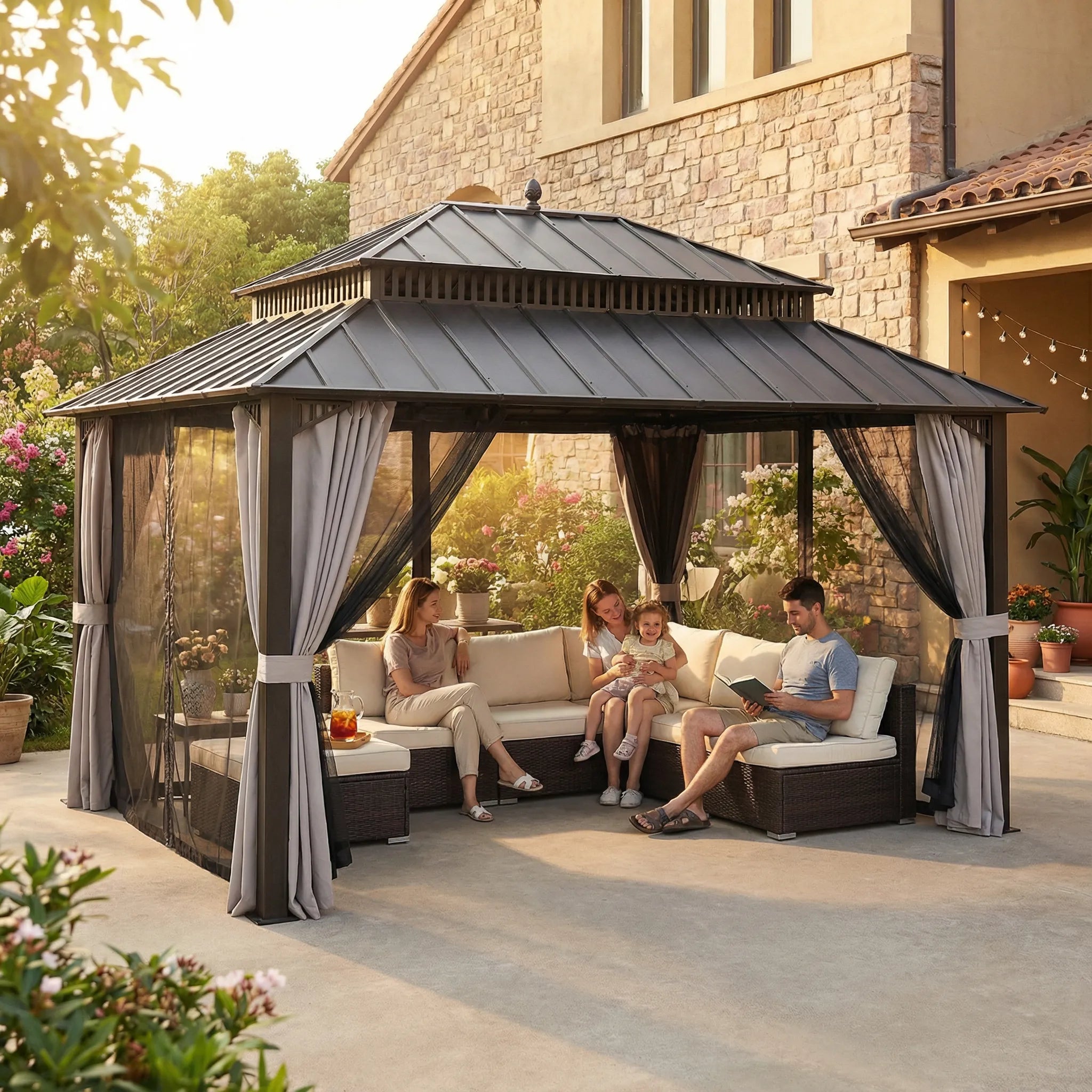
A two-tier roof typically features a raised upper section above the main canopy, leaving an opening between the roof levels. As hot air rises from the grill, some can travel through this opening and escape into the surrounding atmosphere.
This arrangement supports the natural movement of warm air while providing overhead coverage for the cooking area. Compared with a completely closed roof, the raised vent can reduce the tendency for heat and smoke to remain concentrated underneath the canopy.
The benefits depend on the roof's dimensions, construction, and surrounding conditions. A larger opening may provide a more direct route for rising air, while the main roof continues to offer shade and shelter. When evaluating a grilling gazebo, look for a design that balances usable coverage with a clearly defined ventilation opening.
A two-tier structure can also help limit direct exposure to light rain compared with a fully open overhead arrangement, although protection depends on the roof design and weather conditions. It should not be treated as a guarantee of dry cooking conditions during heavy rain or strong storms.
Reducing Grease Condensation on Overhead Surfaces
Grease deposits are another concern when grilling beneath a roof. Cooking releases oil droplets, grease-laden aerosols, and water vapor. When these particles encounter cooler overhead surfaces, some may deposit on the material, creating residue that requires regular cleaning.
A vented grill gazebo can help disperse warm, humid air rather than allowing it to remain trapped beneath the roof. Better air exchange may reduce localized heat and moisture accumulation, helping keep the cooking environment more comfortable.
However, ventilation alone cannot prevent all grease deposits. Grease particles can still travel upward and settle on roof panels, support beams, or nearby furniture. Regular cleaning, appropriate grill positioning, and maintaining sufficient clearance between the cooking equipment and the canopy remain important.
SUNJOY encourages homeowners to consider maintenance as part of their gazebo selection. Accessible roof surfaces, durable materials, and a practical layout can make routine care easier over time.
Balancing Roof Ventilation With Changing Wind Conditions
Wind creates a more complicated challenge for outdoor grilling. A gentle breeze can help disperse smoke, but strong or shifting gusts may push smoke sideways, interfere with combustion, or carry rain into the covered area.
A 2-tier BBQ gazebo roof provides an opening for rising air, but its performance still depends on the surrounding wind. Wind moving across the upper vent may assist or disrupt the natural upward flow. In certain conditions, it may also redirect smoke toward the people sitting or cooking nearby.
For this reason, homeowners should consider more than roof design alone. Position the grill gazebo away from confined corners where smoke can collect, avoid placing the cooking area directly against walls or dense barriers, and observe how prevailing winds move through the yard.
Always follow the grill manufacturer's clearance and ventilation requirements. Never operate a charcoal or gas grill in an enclosed or inadequately ventilated space, and do not assume that a vented gazebo makes indoor or enclosed grilling safe.
Choosing a Grilling Gazebo for Everyday Outdoor Cooking
The right grilling gazebo should complement your cooking routine as well as your outdoor layout. Consider the canopy's dimensions, roof ventilation, frame stability, weather suitability, and available space for food preparation and movement. If you frequently cook for family and guests, adequate clearance around the grill can be just as important as the roof structure.
Explore the SUNJOY BBQ grill gazebo collection to compare outdoor cooking shelters designed for different backyard arrangements. Choosing a model that fits your grill, available space, and local weather conditions can help create a more practical and enjoyable cooking area.
Create a More Comfortable Backyard Grilling Space With SUNJOY
A two-tier vented roof offers a practical approach to managing rising heat and smoke while maintaining overhead coverage. By supporting airflow and helping disperse humid, grease-laden air, a well-designed grill gazebo can address common challenges associated with covered outdoor cooking. Its effectiveness, however, depends on wind conditions, roof construction, grill placement, and regular maintenance.
With SUNJOY, homeowners can explore grilling gazebo options that bring together functional roof design and outdoor comfort. By choosing a suitable structure and following safe grilling practices, you can make your backyard a more inviting place to cook, gather, and enjoy time outdoors.
Leave a comment
This site is protected by hCaptcha and the hCaptcha Privacy Policy and Terms of Service apply.