

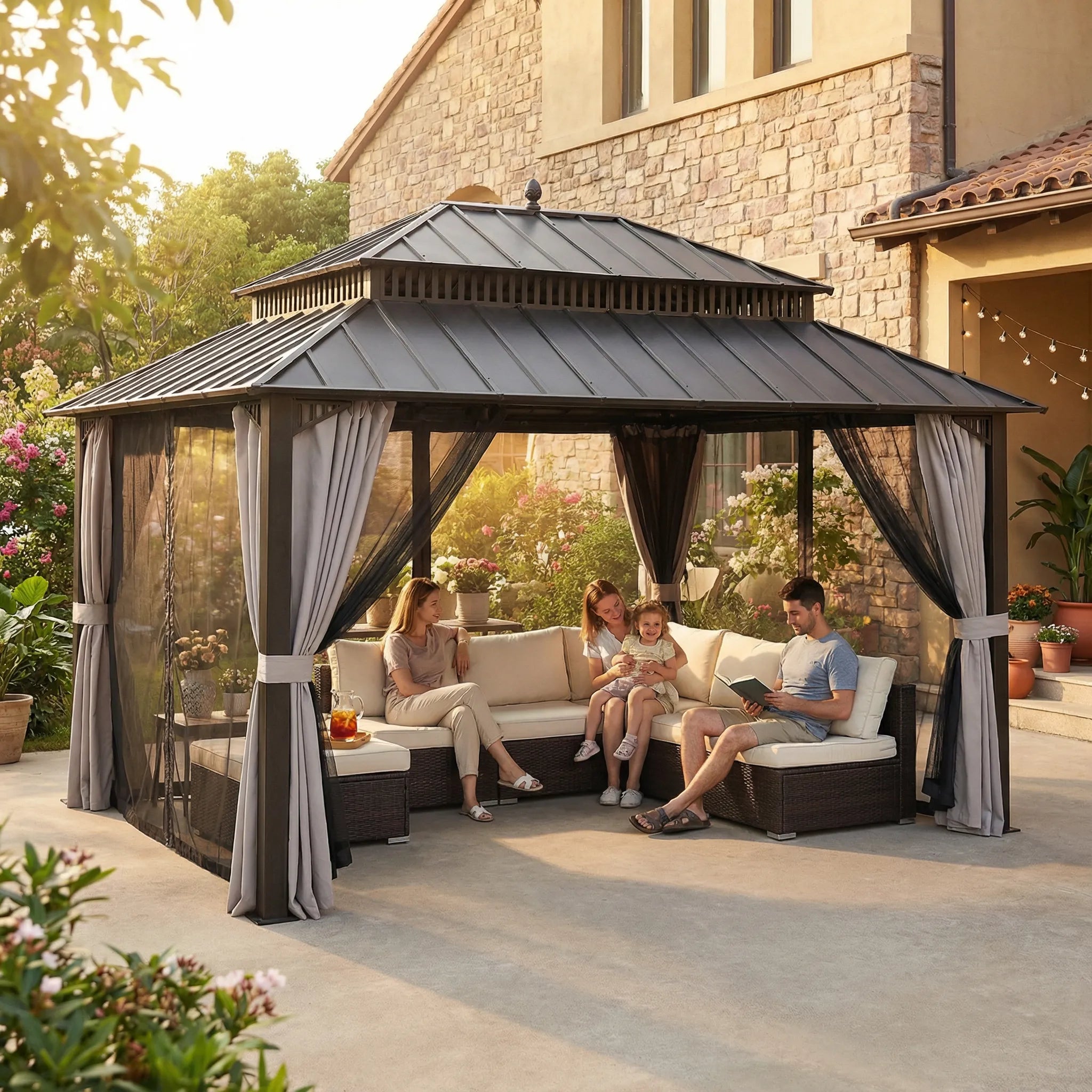

At noon, a pergola roof may shade the table; by late afternoon in fall, lower-angle sunlight can slip beneath the roofline and reach guests from the side. That shift is why side-shade planning starts with observation rather than a promised coverage percentage. Mark the sun's direction at the time the patio is used, note which seats are affected, and see whether the verified canopy movement and furniture layout can respond. Browse Sunjoy to compare current product details before selecting a model.
For more canopy configurations, browse the Sunjoy pergola collection before matching the roofline.
Why Does Low Angle Sun Change the Patio
When the sun sits lower, a shade plan that works at midday can leave an evening chair or dining table exposed. Start with the activity that is interrupted: glare on a screen, heat on a seat, or sunlight across a serving area. Then make a simple site note for several clear days. Record the direction of the light, the time it becomes uncomfortable, nearby tree or building shadows, and the zone people actually use.
- Mark the patio corners and proposed post locations.
- Photograph the sun path from the intended seating area.
- Keep doors, walkways, and emergency access outside the test layout.

Can an Adjustable Canopy Follow the Sun
A canopy can help only in the way the specific product documents. The Sunjoy Palladio adjustable canopy pergola description identifies a sliding canopy that can move toward either side using a roof handle. That gives a homeowner a concrete movement to evaluate against changing light. It does not establish that every canopy blocks side light, that every patio needs the same orientation, or that the structure has a feature not shown on its current page and manual.
How Does a Retractable Canopy Change the Choice
The Sunjoy 10x12 retractable canopy pergola describes a manually adjustable retractable canopy that moves with a pull-through rod along side rails. Its operation is different from the Palladio's side-to-side sliding canopy, so a buyer should compare the action with the sun problem rather than equating the two names. A product may have the right canopy behavior but still be unsuitable if its footprint, interior space, or entry route conflicts with the patio.
What Should You Measure Around the Pergola
|
Patio observation |
What it reveals |
Next action |
|
Late day sun path |
Which side receives low angle glare. |
Test shade at the expected use time. |
|
Furniture orientation |
Where faces and screens need relief. |
Mark seats and circulation before ordering. |
|
Canopy motion |
Whether adjustment reaches the problem side. |
Review only the selected model manual. |
|
Site constraints |
Posts, roof edge, and door clearance. |
Keep the final plan tied to the real patio. |
Measure the full product footprint, internal post-to-post area, door swings, furniture, and the path from the house before deciding where side shade is needed. Use temporary tape for the posts and move chairs through their normal pull-back range. Include the area where the canopy will be operated. A layout that is comfortable in an empty patio can feel restrictive when people, food, and chairs occupy the same route.
Use overall dimensions for patio-edge and eave checks.
Use interior dimensions for table, chair, and lounge placement.
Use the current manual for ground, anchoring, and care requirements.

How Do You Avoid Overpromising Shade
Describe the result as a planning process, not as a guarantee. Orientation, local latitude, seasonal sun angle, trees, neighboring buildings, and the exact furniture arrangement change where light lands. A good article or product comparison can help identify the questions to test, but it cannot replace watching the real patio. Keep any decision about installation or structural attachment within the current product documentation and local requirements.
A Simple Decision Rule
Choose a pergola side-shade approach only after the product's documented canopy movement solves a specific observed problem. If the need is afternoon glare on one edge of the patio, test that edge. If the need is a dining zone, test chair movement and serving flow. If the answer relies on an unverified screen, louver, motor, or weatherproof claim, it is not yet a sound purchase reason.
How Do You Test the Plan Before Ordering
Make the test physical. Use painter's tape or removable markers to show the outer product footprint and the proposed furniture positions. At the time when side sun is most disruptive, stand where guests will sit and watch the route from the house. This reveals whether a canopy adjustment is likely to help the actual activity or whether the patio needs a different table position, smaller furniture, or a different product size.
Repeat the check with doors and windows open. A side-shade plan is not useful if it blocks access, creates a cramped corner, or makes routine patio cleaning difficult. Record the observation with the date and time instead of relying on a memory of a single sunny afternoon. The right answer is specific to the site, so a measured test is more useful than a generic orientation diagram.
Make the final choice only after the observed sun path, the product page, and the furniture layout point to the same answer. That three-part check keeps the side-shade claim grounded in the patio rather than in a generic product category.
Conclusion
Side shade for fall sun begins with observation, then uses verified canopy features to improve a measured patio routine. The Palladio and 10x12 retractable pergola offer different documented adjustment methods. Compare those methods to the live sun path, furniture plan, and current manuals before selecting a configuration.
Leave a comment
This site is protected by hCaptcha and the hCaptcha Privacy Policy and Terms of Service apply.