

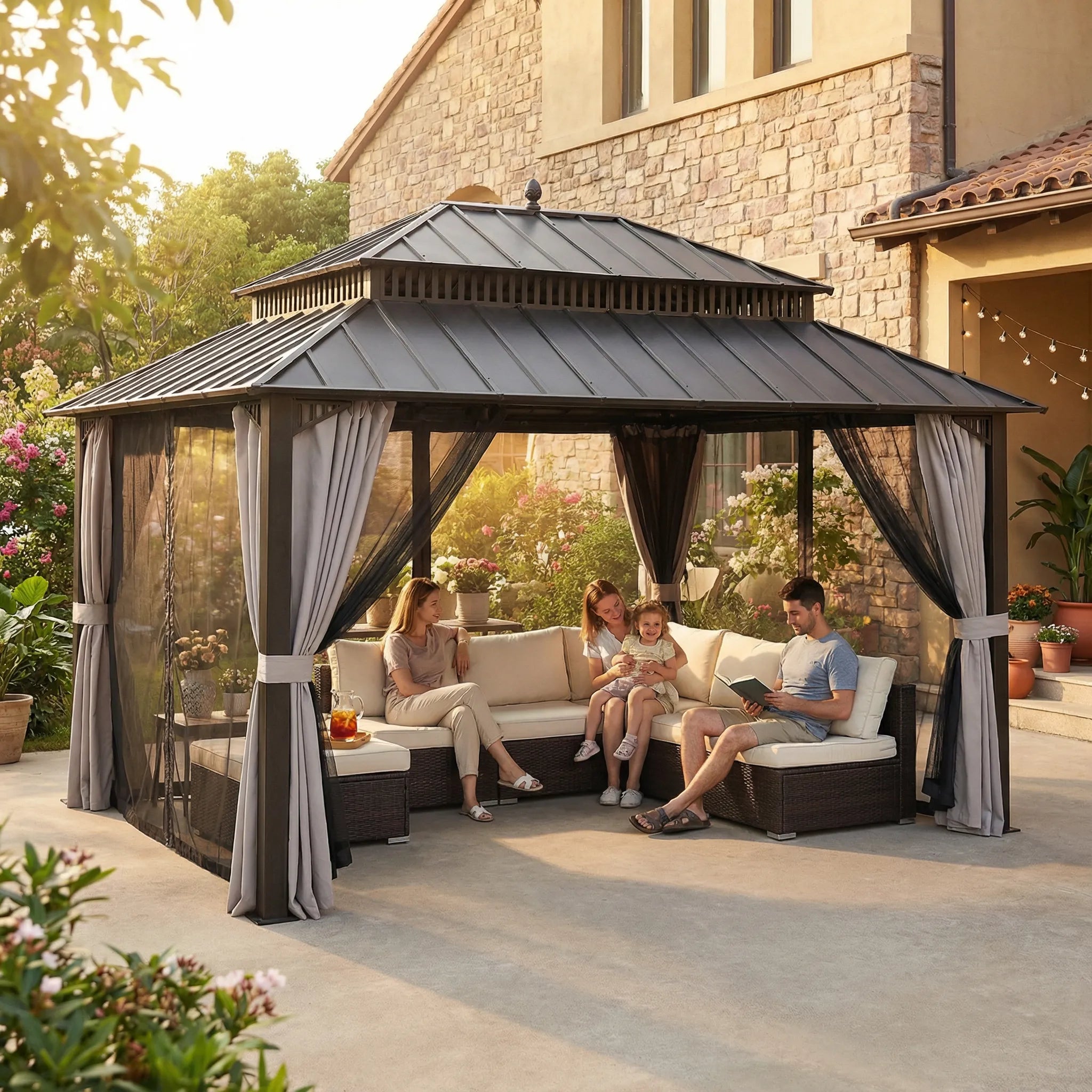



A wood carport can provide practical vehicle protection while complementing the natural look of your outdoor space. However, a successful installation involves more than choosing an attractive design and assembling the structure. Ground conditions, drainage, wind exposure, roof maintenance, and clearance all affect how well a carport performs over time. At SUNJOY, we believe understanding these potential challenges before installation helps homeowners make informed decisions, avoid unnecessary expenses, and get more value from their outdoor structures.

1. Ground Settling: Start with a Stable Foundation
Uneven or poorly prepared ground is one of the most common causes of carport installation problems, and prevention begins with proper site preparation. If the soil beneath a carport shifts or settles, the structure may become uneven, doors and roof components may no longer align properly, and stress can develop at connection points.
Before installing a wood carport, assess the ground for soft soil, poor drainage, and areas where water tends to collect. The installation surface should meet the manufacturer's requirements, and the foundation or anchoring system should be appropriate for local soil conditions. Depending on the design and location, this may involve a properly prepared concrete slab, suitable footings, or another approved foundation method.
Avoid assuming that compacted soil alone will provide sufficient support. Check local building codes and follow the installation instructions for foundation depth, anchoring, and structural connections. If the ground is unstable or the site has a significant slope, professional assessment can help prevent costly corrections later.
2. Rain Splashback: Manage Water Around the Carport
Even when a roof keeps direct rainfall off a vehicle, wind-driven rain can splash upward from the ground and reach tires, lower body panels, and stored items. This is especially noticeable when rain falls onto hard surfaces or when water drains toward the parking area.
To prevent rain splashback under a carport, pay attention to roof runoff and the ground surrounding the structure. Proper grading should direct water away from the parking space and supporting posts. A suitable drainage system, such as a channel drain or other approved solution, may help manage runoff where water tends to accumulate.
Roof overhangs can also influence how rain reaches the area beneath the structure, although their effectiveness depends on roof design and weather conditions. Keep in mind that an open-sided carport cannot provide the same rain protection as a fully enclosed garage.
When selecting a wood carport, consider the roof dimensions, surrounding landscaping, and typical rainfall in your area. Planning for drainage early can help reduce standing water, muddy surfaces, and repeated cleaning.
3. Wind Uplift: Secure the Structure Properly
Strong winds can create upward forces on a carport roof, placing stress on posts, fasteners, and anchoring points. A structure that appears sturdy in calm weather may still be vulnerable if its installation does not account for local wind conditions.
Choose a carport designed for the environmental loads expected at your property. Review the manufacturer's stated wind-load ratings, anchoring requirements, and installation limitations before purchasing. Correctly installed anchors and structural connections are essential, and all components should be assembled according to the supplied instructions.
Do not assume that adding a few extra screws or improvised braces will make a structure wind-resistant. Modifications that have not been approved by the manufacturer may compromise its performance. In areas with severe weather exposure, consult a qualified professional about appropriate anchoring and local code requirements.
Routine inspections can also help identify loose fasteners, damaged connections, or deteriorating wood before these issues become more serious.
4. Gutter Clogs: Keep Roof Drainage Clear
On wood carports equipped with gutters, leaves, twigs, and other debris can restrict water flow and cause overflow near support posts or foundations. Over time, poorly managed runoff may contribute to erosion, persistent moisture, and deterioration of nearby materials.
If your wood carport includes gutters, inspect them regularly, particularly after storms and during seasons when leaves fall. Remove accumulated debris safely and check that downspouts remain clear. Water should discharge away from the foundation and other areas where pooling could occur.
Not every carport includes an integrated gutter system, so consider whether additional drainage components are suitable for your selected model. Any installation should be compatible with the roof design and completed according to manufacturer guidance.
5. Low Headroom: Measure Before You Assemble
Insufficient clearance can turn an otherwise suitable carport into a daily inconvenience. A roof that sits too low may interfere with taller vehicles, roof racks, cargo carriers, or the opening of vehicle doors and tailgates.
Measure your vehicle's full height, including any accessories that remain attached during parking. Then compare those measurements with the carport's specified clearance, accounting for roof beams, sloped sections, and other components that may reduce usable space.
Also consider how the vehicle will enter and exit the structure. Driveway slopes and changes in ground elevation can affect practical clearance, even when the listed dimensions appear sufficient.
Accurate measurements before installation can help you avoid expensive adjustments and ensure the finished structure suits your everyday needs.
Find Value Without Overlooking Quality
Searching for a cheap wood carport is understandable when you want dependable vehicle coverage without exceeding your budget. However, the initial purchase price is only one part of the overall cost. Foundation preparation, anchoring hardware, installation, drainage improvements, and ongoing wood maintenance can all influence the final investment.
Compare dimensions, materials, roof construction, warranty terms, and installation requirements rather than choosing solely by price. A lower-cost option may suit your property well, provided its specifications meet your needs and local conditions.
SUNJOY offers a range of wood carport designs for homeowners to explore. Visit our wood carport collection to review available options and compare product details before making your decision.
Plan Carefully for Long-Term Performance
A well-planned wood carport starts with stable ground, effective drainage, suitable wind protection, accessible roof maintenance, and sufficient headroom. Addressing these five common challenges before installation can help reduce preventable problems and support more reliable everyday use. At SUNJOY, we encourage homeowners to evaluate their site, review product specifications, and follow installation guidance carefully. With the right preparation, you can choose a carport that balances practical protection, budget considerations, and the needs of your property.
Leave a comment
This site is protected by hCaptcha and the hCaptcha Privacy Policy and Terms of Service apply.