


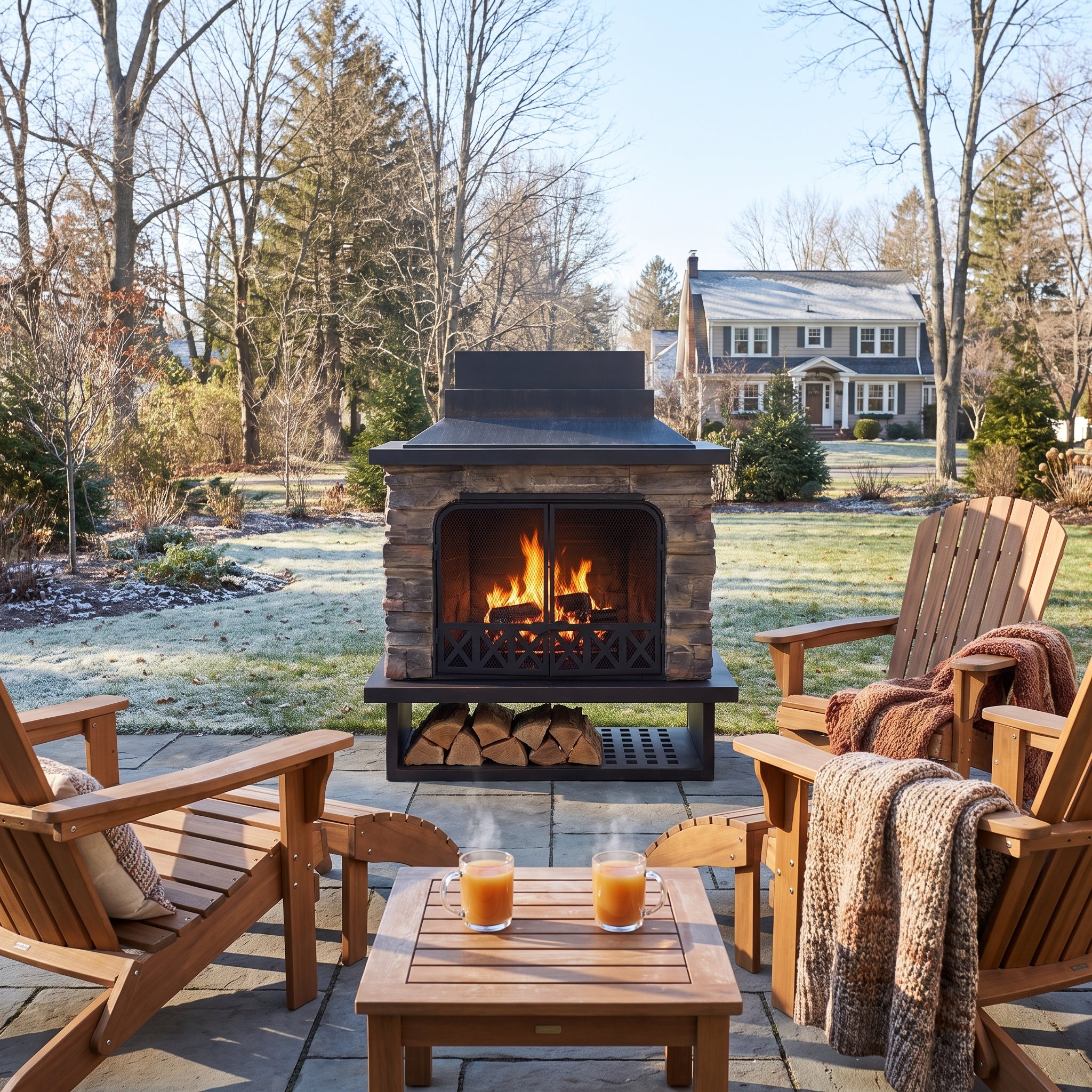
An outdoor fireplace can make a patio or backyard more comfortable, especially during cool evenings. However, regular exposure to heat, moisture, and changing weather can gradually affect its appearance and durability. Steel fire bowls may develop surface rust, while fireplace chimneys can show heat discoloration after repeated fires. Understanding how to maintain these surfaces helps homeowners preserve their outdoor fireplace and enjoy reliable outdoor heating throughout the seasons.
SUNJOY offers outdoor wood-burning fireplaces designed to complement outdoor living spaces. With consistent cleaning, appropriate protective coatings, and sensible storage practices, homeowners can help maintain their fireplace's appearance and extend its useful life.

Why Do Steel Fire Bowls and Fireplace Chimneys Rust or Discolor?
Rust develops when iron-containing metal reacts with oxygen and moisture. Rain, morning dew, humidity, and wet debris can leave steel surfaces vulnerable, particularly when protective coatings become scratched or worn. Ash and soot can also retain moisture when left inside the fire bowl.
Heat discoloration has a different cause. Repeated exposure to high temperatures can change the appearance of steel and its existing finish. Depending on the material and coating, surfaces may develop darker patches, faded paint, or heat-related color changes around the fire bowl and chimney.
These changes are not always signs of structural damage. However, flaking coatings, deep corrosion, cracks, or distorted metal deserve closer inspection before the next fire. Identifying the cause helps homeowners choose the right maintenance method instead of applying paint to a problem that requires repair.
How to Prevent Rust on a Metal Fire Pit
Routine maintenance is one of the simplest ways to prevent rust on a metal fire pit or outdoor fireplace. After each fire has completely cooled, remove loose ash and unburned debris. Make sure the fire bowl is dry before covering or storing the unit, and avoid leaving wet leaves or other moisture-holding materials inside.
Position the fireplace on a stable surface with adequate drainage. Where practical, choose a sheltered location that reduces direct exposure to rain without compromising the clearances required for safe operation. A weather-resistant cover can offer additional protection when the fireplace is not in use, but it should only be fitted after the unit has completely cooled and should not trap moisture against the metal.
Inspect the finish periodically, paying particular attention to joints, edges, fasteners, and areas where the coating has chipped. Minor surface rust may be manageable with manufacturer-approved cleaning and coating methods. However, deep corrosion, extensive coating failure, cracks, or metal deformation should be assessed before the fireplace is used again.
Choosing High-Temperature Paint for an Outdoor Fireplace
Ordinary exterior paint is generally unsuitable for surfaces exposed to direct fire or intense heat. It may blister, peel, discolor, or release unwanted fumes when heated beyond its rated temperature.
When considering high-temperature paint for an outdoor fireplace, verify that the coating is specifically approved for the intended component and its operating temperature. Follow the fireplace manufacturer's maintenance instructions and confirm compatibility before applying any aftermarket coating. A coating intended for a warm exterior surface may not be appropriate for a surface directly exposed to flames.
Before applying paint, allow the fireplace to cool completely. Remove loose rust and peeling paint using the preparation method recommended by the coating manufacturer. Clean away dust, grease, and residue, then ensure the surface is thoroughly dry. Apply the product at the recommended thickness and allow the specified curing time before lighting another fire.
Never paint the inside of a fire bowl, a surface directly exposed to flames, or another component unless the coating is explicitly approved for that application. Avoid spraying paint onto hot metal, and follow all ventilation and personal protection instructions on the label.
Caring for Fireplace Chimneys After Repeated Use
A fireplace chimney is exposed to heat, soot, and outdoor moisture, making regular inspection important. Once the unit has cooled, check the chimney exterior for discoloration, peeling paint, rust spots, and accumulated residue. Clean the surface according to the manufacturer's care instructions, using nonabrasive tools that will not unnecessarily damage the finish.
Do not assume that every color change needs repainting. Some heat-related changes are cosmetic and may occur naturally during normal use. If the metal remains intact and the coating is stable, routine cleaning and monitoring may be sufficient. If rust continues to spread or the chimney shows signs of structural deterioration, consult the manufacturer before using the fireplace again.
For wood-burning models, maintain the airflow and chimney components as directed by the product manual. Do not modify the chimney, obstruct ventilation openings, or apply coatings that could interfere with safe operation.
Seasonal Storage and Outdoor Heating Maintenance
Weather protection matters just as much as cleaning. Before winter storage or an extended period without use, remove ash and debris, inspect the finish, and ensure all components are completely dry. Store removable accessories in a dry location and protect the fireplace with a suitable cover when recommended.
At the beginning of each outdoor entertaining season, inspect the fire bowl, chimney, fasteners, and supporting structure. Confirm that the unit remains stable and that any protective finish is in good condition. Follow the specific operating, clearance, and maintenance instructions supplied with your fireplace.
SUNJOY encourages homeowners to make routine care part of their outdoor living habits. Whether the fireplace serves as a patio focal point or provides warmth for evening gatherings, regular attention can help preserve its finish and keep maintenance manageable.
Keep Your Outdoor Fireplace Ready for Every Season
Rust and heat discoloration are common maintenance concerns for steel fire bowls and fireplace chimneys, but they can often be managed with timely cleaning, moisture control, appropriate high-temperature coatings, and regular inspections. The key is to distinguish cosmetic changes from corrosion or structural damage and to use only products approved for the intended surface.
With practical care and proper storage, homeowners can protect their investment and continue enjoying comfortable outdoor gatherings. Explore the SUNJOY collection of outdoor wood-burning fireplaces to find options that complement your backyard, patio, and outdoor heating needs.
Leave a comment
This site is protected by hCaptcha and the hCaptcha Privacy Policy and Terms of Service apply.