


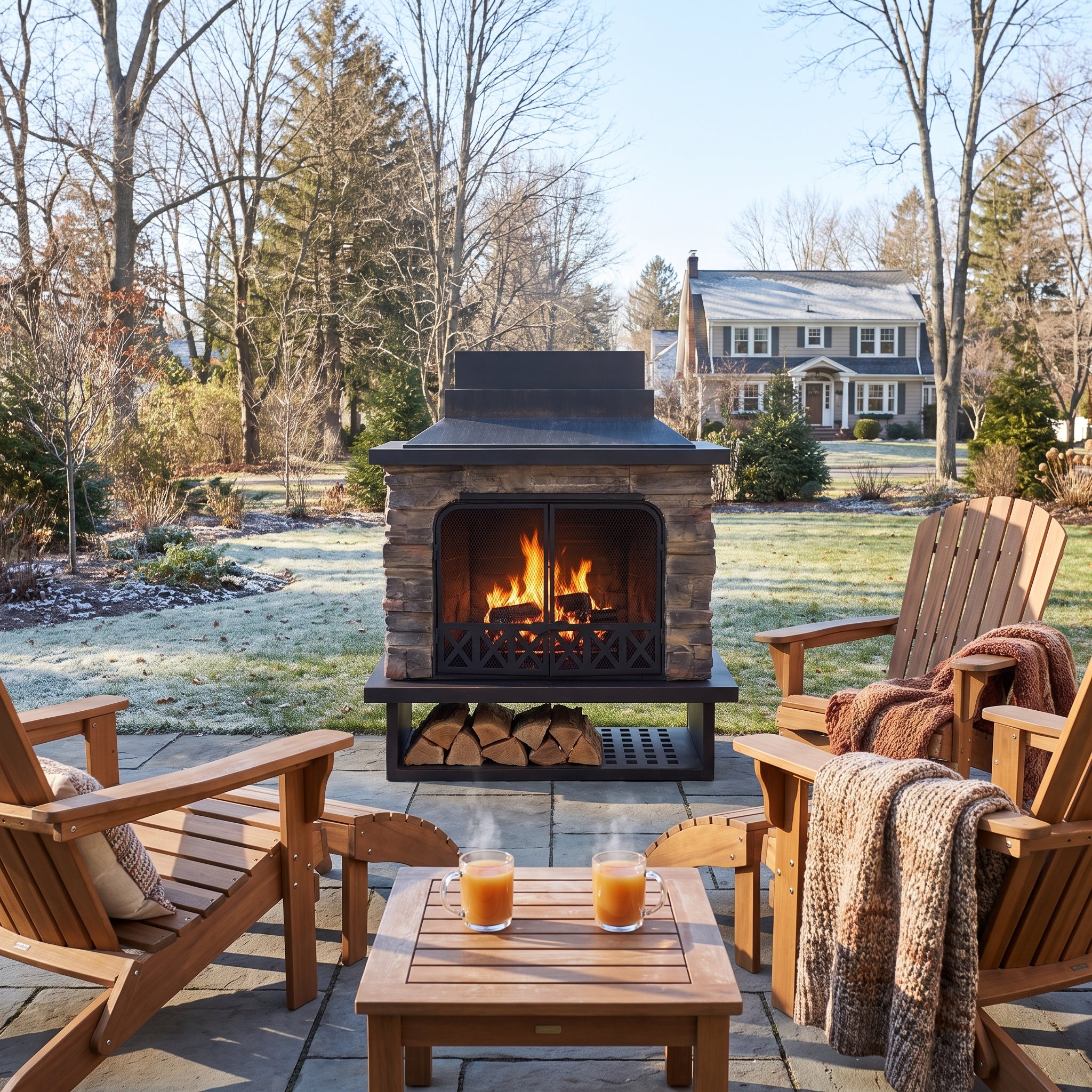
Whether you can have a fire pit in your backyard depends on the rules at your address, the appliance and fuel type, property restrictions, and any temporary bans. A large backyard does not guarantee permission, and a propane table is not automatically exempt from restrictions.
For U.S. homeowners, answering “Can I have a fire pit in my backyard?” requires checks before buying and before each use. Start with the relevant authorities, assess the location, and compare products once you know the permitted fuel types and available space.

Find the Rules That Apply to Your Address
Start with Local Fire and Air-Quality Authorities
Look for guidance from the fire department, fire marshal, or other authority responsible for your address. Ask how the proposed appliance is classified and whether any permit or inspection is required.
Describe the product clearly. A portable wood-burning bowl, a built-in fire feature, and a propane fire table may fall under different provisions. Fairfax County, Virginia, publishes guidance specifically for portable outdoor solid-fuel fireplaces and requires their use to follow manufacturer instructions. Its page distinguishes these appliances from recreational fires and cooking devices; those categories should not be treated as interchangeable nationwide.
Air-quality restrictions can apply separately from fire rules. For example, the San Francisco Bay Area’s Wood Burning Rule restricts wood burning during particulate-pollution Spare the Air Alerts, subject to its stated exemptions. This regional example illustrates why checking fire rules alone may not settle the question.
Do not rely on a regulation quoted for a different city. Requirements can change across municipal and county boundaries, and online summaries may omit exceptions.
Before contacting an authority, prepare:
- Your address, proposed fuel, and exact appliance model.
- Whether the appliance is portable or fixed.
- A description or sketch of the proposed location.
- Questions about permits, inspections, and where to find temporary restrictions.
Keep the response and date with the product instructions. If the fuel or location changes, check whether the answer still applies.
Check Temporary Restrictions
General permission does not necessarily apply every day. Burn bans, emergency orders, or weather-related restrictions may temporarily change what is allowed.
Read the actual scope of the restriction. Do not assume propane is permitted just because the notice discusses wildfire risk or that cooking automatically creates an exception.
Check again on the day of use rather than treating last week’s information as sufficient.
Review HOA and Rental Conditions
An HOA, condominium association, or landlord may impose additional restrictions. These can address open flames, fuel storage, smoke, patio appearance, or changes to shared property.
Public permission and private permission are separate questions. Approval from one does not replace the other.
Keep written guidance with the product instructions. If an answer is unclear, provide the model details and proposed location when asking for clarification.
Understand How Fuel Type Affects Your Options
Wood-burning and propane fire pits offer different routines. Comparing those routines helps you choose a product you will use comfortably and maintain consistently.
A wood-burning model involves storing suitable fuel, tending the fire, and handling ash afterward. Smoke and sparks also affect how the surrounding space is used.
A propane model involves cylinder storage, connection checks, and the operating procedure specified by the manufacturer.
|
Consideration |
Wood-burning fire pit |
Propane fire pit |
|
Fuel preparation |
Suitable dry fuel and approved ignition method |
Correct cylinder and connection |
|
During use |
Fire tending and ember management |
Flame control and gas-system operation |
|
After use |
Extinguishing, cooling, and ash handling |
Manufacturer’s shutdown and cooling procedure |
|
Rule checks |
Recreational burning, smoke, and temporary bans |
Gas appliance, cylinder, and temporary restrictions |
|
Routine care |
Ash removal and inspection |
Burner-area care and connection checks |
Use local requirements to narrow your shortlist. Once you have checked fire pit regulations with the relevant authority, compare product designs that fit the permitted fuel type and your available space. The linked collection is for browsing products; obtain regulatory guidance from the responsible public authority.
Check Your Proposed Fire Pit Location
Follow the Appliance’s Placement Requirements
Read the instructions before committing to a patio location. Check required separation from walls, fences, furniture, vegetation, and anything overhead.
There is no single distance that can be presented as correct for every appliance and jurisdiction. Where local requirements and product instructions both apply, the installation must satisfy both. Ask for clarification if they appear inconsistent.
A protective mat does not automatically make a combustible deck an approved surface. Similarly, stone paving does not resolve an overhead clearance problem.
Consider How People Move Through the Space
If you are still choosing between models, draw the proposed layout before ordering. Mark the appliance footprint, required clearances, seating, cylinder or wood storage, and the route back to the house. This often reveals a space problem that product photographs do not.
Look beyond the empty patio. Picture the space with chairs pulled out, guests walking around, and children or pets moving between the house and yard.
Keep the appliance away from the main travel route. Guests should not need to squeeze between a hot surface and a chair to reach the door.
Plan where fuel, tools, and drinks will go. Avoid arrangements that encourage someone to lean over the fire to reach a table.
Assess Wind and Nearby Openings
Consider doors, windows, neighboring seating areas, and places where smoke could collect or drift. A location that works in one wind direction may be unsuitable when conditions change.
Do not solve a smoke problem by moving a burning fire pit. If conditions become unsuitable, follow the shutdown procedure.
Gazebos and covered patios need particular attention. Never assume that a metal roof or open sides automatically make a covered location acceptable.

Compare Two SUNJOY Backyard Fire Pit Types
The SUNJOY catalog illustrates two different backyard fire pit formats. These examples do not establish permission for a particular site. Check current availability before planning a purchase.
A301060500 Wood-Burning Fire Pit
The 28-inch Vulcan Hexagon Smokeless Fire Pit, Rectangular Pattern version, uses a double-wall design intended to improve combustion airflow.
- Removable ash tray.
- Stainless steel combustion chamber.
- Included poker and PVC cover.
It suits shoppers comparing a freestanding fire pit format, provided the location and local rules allow its use.
A301061100 38-Inch Oval Smokeless Fire Pit
This wood-burning model features a black oval body with a dot-grid pattern, offering a different shape from the hexagonal A301060500.
- Approximately 38 inches long, with an oval footprint.
- Stainless steel and steel construction.
- Double-layer airflow design intended to reduce smoke through secondary combustion.
- Removable ash tray for cleanup after the fire pit has fully cooled.
- Includes a poker and PVC protective cover.
The manufacturer specifies untreated wood or fire logs and prohibits cooking on this model. Follow its instructions for placement, clearances, extinguishing, and cooling. A smokeless design does not establish permission to burn; check the restrictions that apply at your address before use.

Complete a Final Check Before Each Use
Once the installation is established, a short routine makes future use simpler.
- Check current restrictions and weather. If a notice is unclear, postpone the fire until you have a reliable answer. A social gathering can continue without lighting the appliance.
- Inspect the product. Look for damage, missing components, obstructions, or maintenance issues identified in the manual. For a gas model, complete the specified connection and leak-check procedure; never test for leaks with a flame.
- Clear the surrounding area. Move cushions, packaging, dry leaves, and other combustible items away from the operating space. Keep the exit route open.
- Prepare for shutdown and emergencies. Have the fire-extinguishing equipment required by local guidance and the appliance instructions. Make sure the responsible adult knows the shutdown procedure before ignition.
- Plan the end of the evening. Keep a responsible adult present until the fire is fully extinguished. For propane, shut off the fuel supply as directed. Follow the manufacturer’s cooling requirements before handling the appliance. Guests leaving does not mean the equipment is ready to cover or store.
Keep the local guidance and product instructions together, then check current restrictions before each gathering. Once permission, placement, and fuel requirements are settled, you can choose the format that suits how you entertain: a wood fire to tend or a propane table with adjustable flame control.
Leave a comment
This site is protected by hCaptcha and the hCaptcha Privacy Policy and Terms of Service apply.