


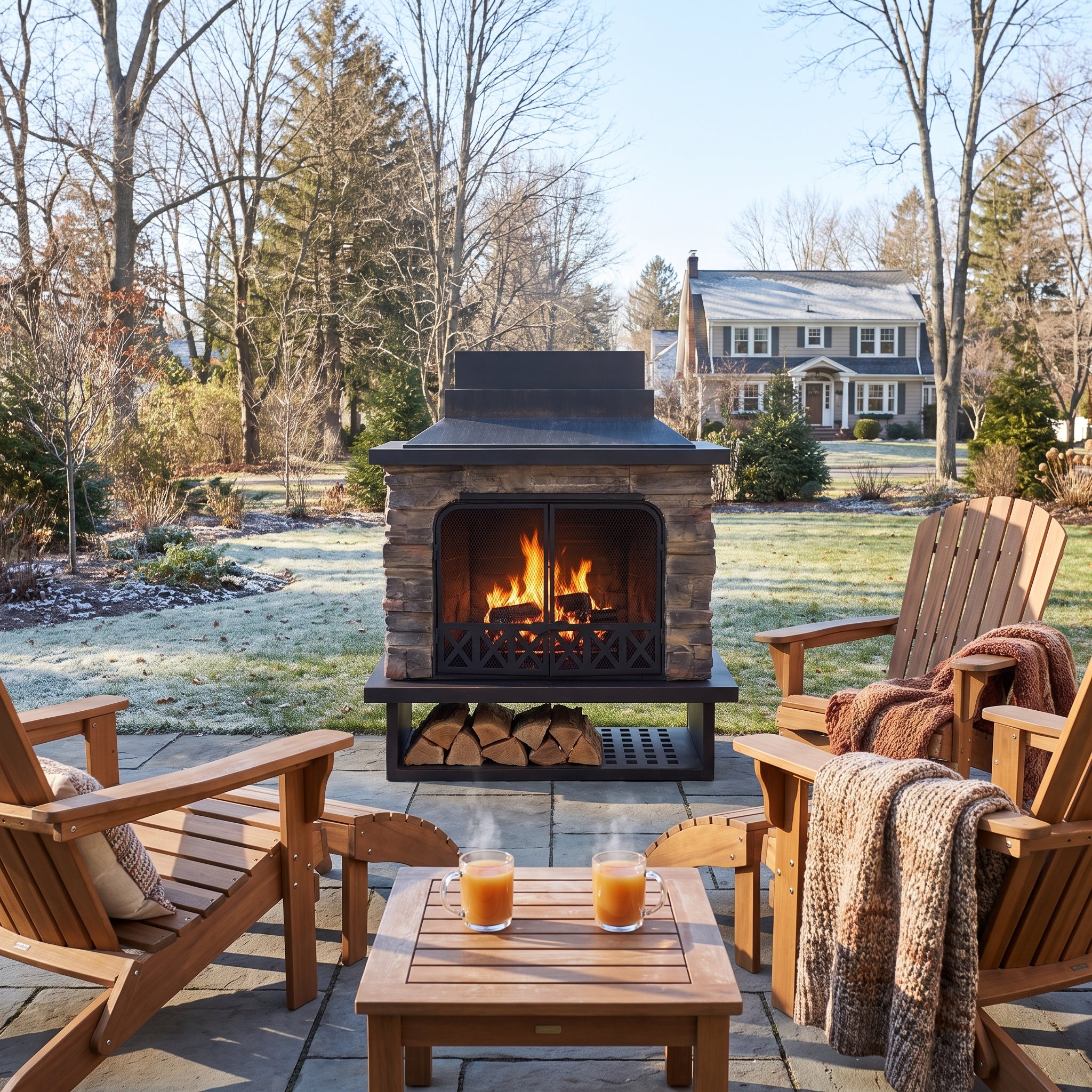
Vegetables sizzling in a pan and bread warming on the cooking surface can turn a backyard fire into dinner. The first step, however, is choosing a fire pit that is actually designed for the cooking method you have in mind.
So, can you cook on a fire pit? Yes, if the model supports cooking and you use the specified fuel and accessories. A supplied cooking pan provides a different starting point from a decorative fire table intended only for warmth.
Once you have suitable equipment, keep the first meal simple. A small menu gives you time to learn how the cooking surface heats up, manage the cooking surface, and serve food without juggling several unfamiliar tasks at once.
Check Whether Your Fire Pit Supports Cooking
Look for an explicit cooking function in the product information and manual. Check which accessories are supplied or approved, how they attach, and which fuels are permitted.
Identify the actual cooking accessory before assembly. A spark screen or decorative lid serves a different purpose and should not support food or cookware unless the manufacturer expressly specifies that use. Check the accessory’s supports and attachment points as well as its cooking surface.
Also check the load and positioning requirements for any cooking accessory. A pan balanced across the edge of a bowl can shift when stirred, even if it initially seems stable.
If the instructions prohibit cooking or do not establish an appropriate method, use a separate grill or other cooking appliance. Do not assume that placing food on a skewer avoids every restriction.
For gas fire features, food drips and debris may interfere with parts not intended for cooking. Use the manufacturer’s stated purpose as the deciding factor rather than relying on photographs of people gathering around a flame.
Choose the Right Fuel and Tools
Match the Fuel to the Appliance
Use only fuel permitted by the manufacturer and suitable for the cooking task. Do not burn painted or treated wood, household waste, or miscellaneous packaging.
A model that accepts wood does not necessarily accept charcoal, and a model that accepts both may have different operating requirements for each.
Prepare the amount you expect to need before starting. Adding excessive fuel midway through cooking can make heat harder to control and delay the meal.
Use the approved lighting method. Never add gasoline or other unsuitable accelerants to a fire.
Set Up a Small Cooking Station
Gather long-handled cooking tools, appropriate heat-resistant gloves, clean serving dishes, and a food thermometer for checking meat, poultry, and fish. Keep fire-tending equipment separate from utensils that touch food.
Arrange a stable preparation surface away from the hot appliance. Put raw ingredients on one side and clean plates on another so the workflow is obvious.
Plan where hot accessories will rest after removal. A table covered with paper plates and napkins is not a suitable landing place for a hot pan.
Keep chilled foods refrigerated or in a properly cooled container until needed. Bring out smaller batches rather than leaving the entire meal beside the fire.

Match the Cooking Method to the Food
If you are searching for “bbq on fire pit,” start by matching your menu to the appliance’s approved cooking surface.
Cooking on a Pan or Grate
A suitable cooking pan supports smaller foods that could fall through an open grate. Cut vegetables into reasonably consistent pieces so they cook at a similar rate.
Avoid overcrowding. Leaving working space makes it easier to turn food and move pieces away from a hotter area.
Use a grate only when it is designed and supported for the appliance. Check that food can be turned without destabilizing the accessory.
Roasting with Skewers
Long cooking skewers can work for foods suited to roasting when that use is permitted. Rotate the food gradually and keep hands away from the heat.
Provide a designated place for used skewers. Their tips may remain hot after the food has been removed.
Work in small batches. If your meal needs more space than the approved accessory provides, reduce the batch size rather than adding an unsupported grate. Prepare a side dish indoors so you can focus on managing the food over the fire.
|
Food |
Suitable method, when approved |
Main preparation point |
|
Sliced vegetables |
Cooking pan |
Use similar sizes and avoid crowding |
|
Bread or flatbread |
Suitable pan or grate |
Watch closely for rapid browning |
|
Marshmallows |
Long roasting skewer |
Rotate gradually and supervise children |
|
Burgers |
Approved pan or grate |
Check internal temperature |
|
Chicken portions |
Approved cooking surface |
Allow enough time and verify doneness |
Manage Heat and Check Food Doneness
Build Controllable Heat
The biggest flame is rarely the easiest cooking environment. For wood-burning cooking, an established bed of embers may provide more manageable heat than a freshly built fire, depending on the appliance instructions and recipe.
Give the fire and cooking surface time to reach the appropriate condition. Add fuel only as allowed, and avoid sudden changes that overwhelm the cooking area.
Observe how the surface behaves. One area may brown food faster than another. Move food or adjust the permitted controls rather than assuming the whole pan has an identical temperature.
Keep the fire within the appliance’s operating limits. A large meal is not a reason to exceed its fuel capacity or improvise a bigger cooking platform.
Measure Food Temperature
Browning, grill marks, and cooking time do not reliably establish that meat is done.
USDA guidance calls for whole cuts of beef, pork, veal, and lamb to reach 145°F, followed by at least three minutes of rest. Ground beef, pork, veal, and lamb should reach 160°F; all poultry, including ground poultry, should reach 165°F.
Fish should reach 145°F. Use a food thermometer correctly for the item being cooked. Check the thickest relevant area, avoiding bone, and clean the probe between uses.
Transfer cooked food to a clean plate. Do not reuse a plate or utensils that held raw meat without cleaning them first.

Check Cooking Approval: The SUNJOY A301070200
The A301070200 20-Inch Square Wood-Burning Fire Pit from SUNJOY illustrates why a fire pit’s appearance and accessories should not be treated as proof of cooking suitability.
Its features include:
- A black steel body with a powder-coated finish.
- A square design measuring approximately 20 inches long and wide.
- A geometric base with decorative flame cutouts.
- An included mesh spark screen and poker.
This model’s instruction manual explicitly prohibits cooking and grilling food. The mesh spark screen is a protective accessory, not a cooking grate, and the listed components do not include a cooking pan.
Use this model as an outdoor fire feature according to its instructions. For preparing food, choose separate equipment whose manufacturer expressly permits the intended cooking method and accessories.

Clean the Cooking Surface and Fire Pit After Use
Finish the cooking session with the same separation you used during preparation: deal with food, cooking accessories, and fire residue as different tasks.
Refrigerate leftovers promptly. USDA guidance limits perishable food left without safe temperature control to two hours, reduced to one hour when the surrounding temperature exceeds 90°F. Discard food that exceeds these limits; putting it back in the refrigerator does not make it safe.
Follow the appliance’s shutdown procedure. Allow the pan and fire pit to cool as directed before removing accessories or cleaning them.
Remove food residue using the cleaning method specified for the cooking surface. Avoid abrasive treatments or chemicals that could damage its finish.
Handle ash separately according to the fire pit instructions. Do not sweep food scraps, disposable plates, and other waste into the bowl to burn them.
Before storage, check that cleaned components are dry and correctly reassembled. Cover only when the product is fully cool and ready for storage.
For the next meal, build on what worked: the batch size, the cooking surface, and the foods you could manage comfortably. There is no need to prepare the entire dinner over the fire. Even one well-cooked dish can make an ordinary backyard evening feel different.
Leave a comment
This site is protected by hCaptcha and the hCaptcha Privacy Policy and Terms of Service apply.